
Guides / How tennis points end
Explainer
How tennis points end
Every point ends one of three ways: someone hits a winner, someone makes an error, or the serve decides it.
Charting a match is mostly saying which. Here is what each ending means, and how to choose when it’s close.
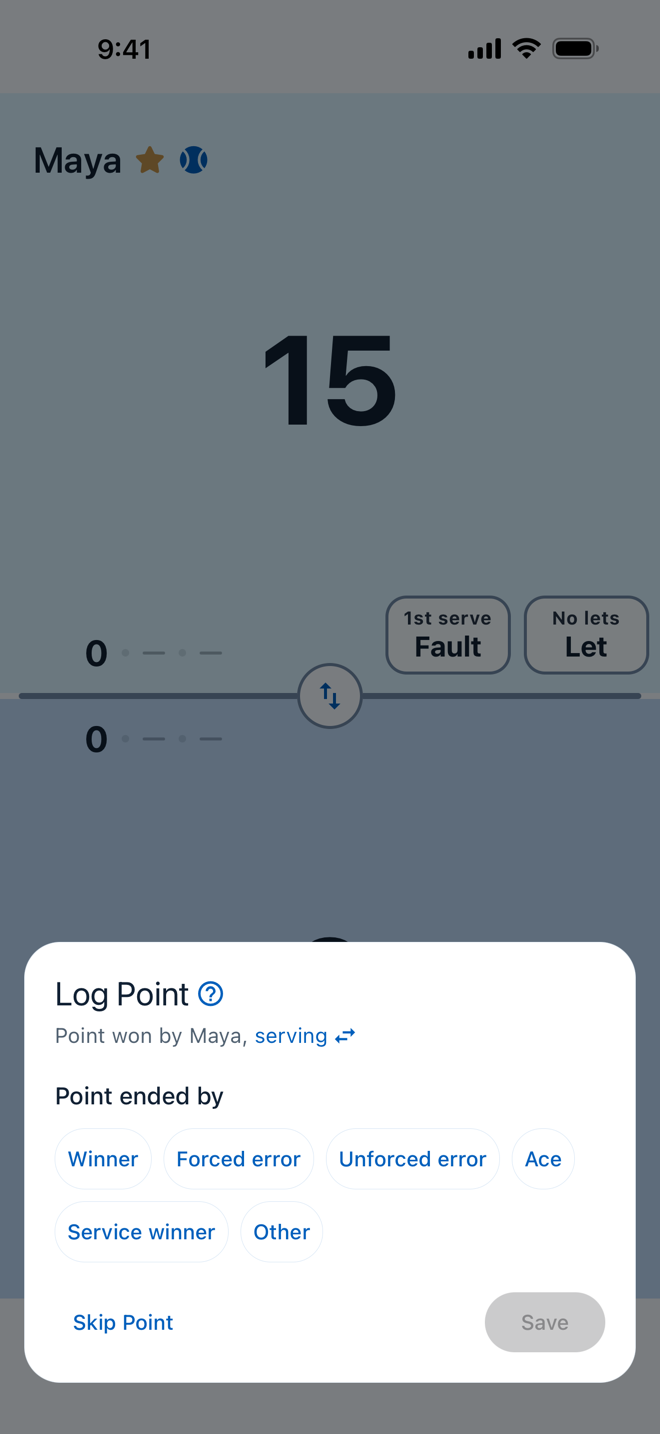
In a rally
Winner
A shot that lands in and the opponent can’t reach.
A forehand into the open court that nobody gets a racket on.
Forced error
A miss the opponent’s shot caused. The player was stretched, rushed, or handling a ball too good to control.
Lunging for a wide ball and pushing it into the net.
Unforced error
A miss on a ball the player would normally make: in position, with time, under no real pressure.
A rally ball from the middle of the court, hit long.
On the serve
Ace
A serve that lands in and the returner doesn’t touch.
A serve down the middle that goes straight past.
Service winner
A serve the returner touches but can’t put back in play, because the serve was too good.
If the returner should have made it, tag an error on the return instead.
A hard serve into the body that comes off the frame.
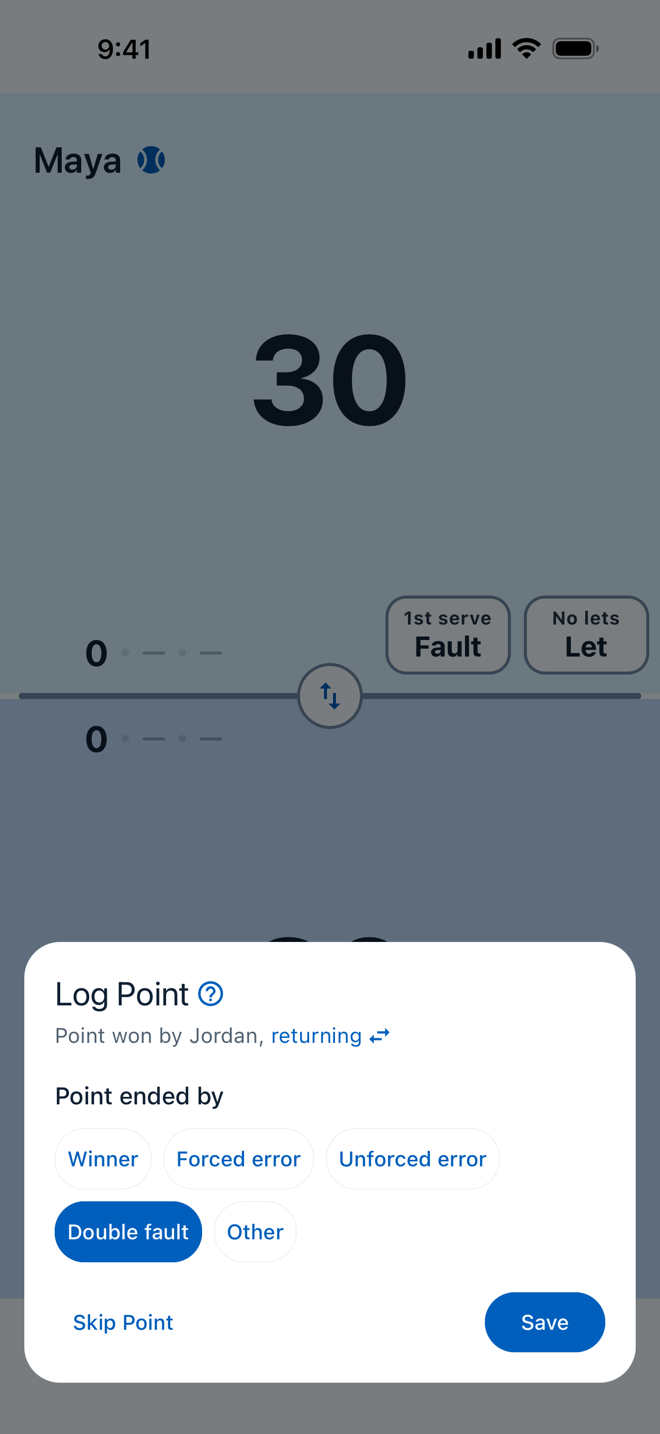
Double fault
Both serves miss. The point goes to the returner.
First serve long, second serve into the net.
Anything else
Other
RallyTap offers Other for anything that doesn’t fit.
A penalty, a ball that hits a player, or a point you saw end but couldn’t classify.
Forced or unforced?
This is the one judgment call in charting, and nobody agrees on every point. Ask yourself: “What was the player dealing with when they missed?”
Unforced
- In position and balanced
- Had time for a normal swing
- A routine rally ball
Forced
- Stretched or off balance
- Rushed
- A ball with real pace, depth, or angle
When you can’t decide, pick one way to handle it for both players for the whole match. Being consistent matters more than being right on any single point.
Which shot
For a winner you pick the winning shot. For an error you pick the shot that missed.
- Forehand and Backhand: hit after the bounce.
- Return: the shot that returns a serve. Offered only for the receiver.
- Volley: hit before the bounce, usually at the net.
- Overhead: a smash, hit above the head.
- Drop shot: a soft shot that lands just over the net.
- Lob: a high shot over an opponent at the net.
- Passing shot: hit past an opponent at the net.
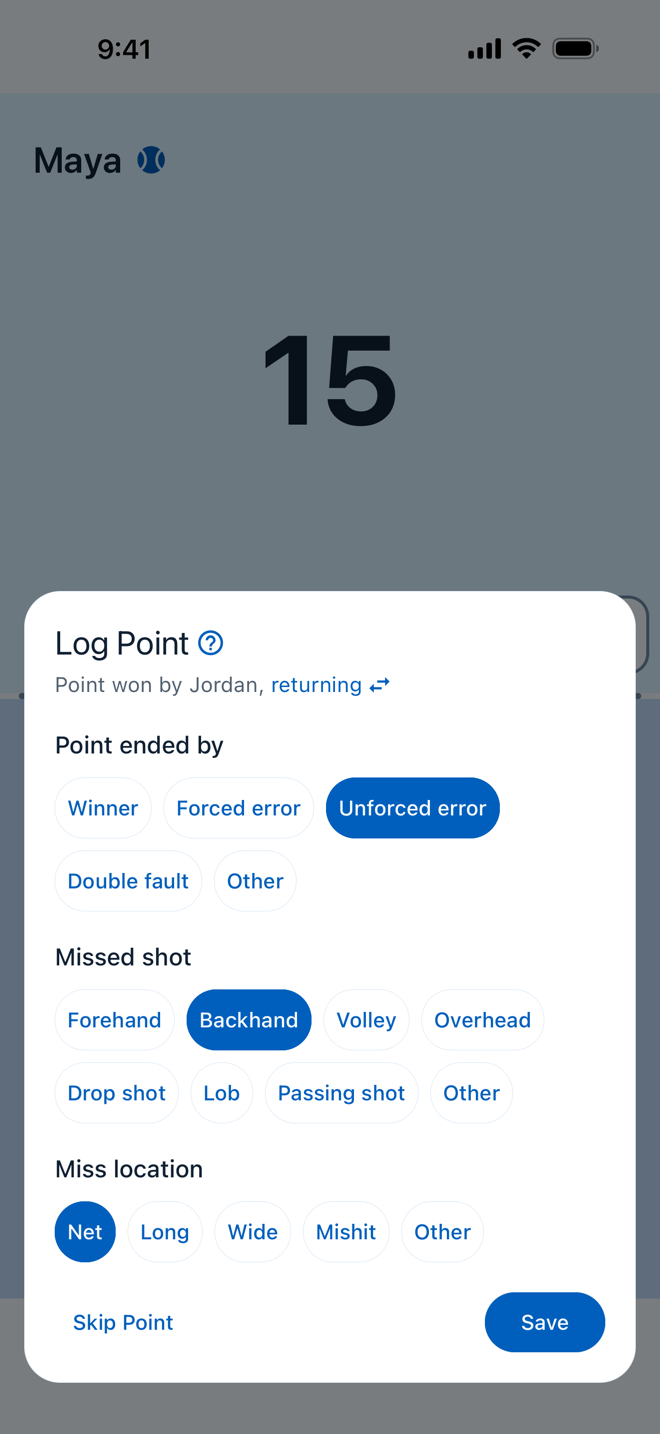
Where it missed
For an error, you can also say where the ball went.
- Net: into the net.
- Long: past the baseline.
- Wide: outside the sideline.
- Mishit: off the frame.
This is often the most useful detail. Backhands into the net and backhands long call for different practice.
Why the choices change from point to point
Once you’ve said who serves first, the app knows who served every point and only offers the endings that are possible. An ace or a service winner appears when the server won. A double fault appears when the returner won.
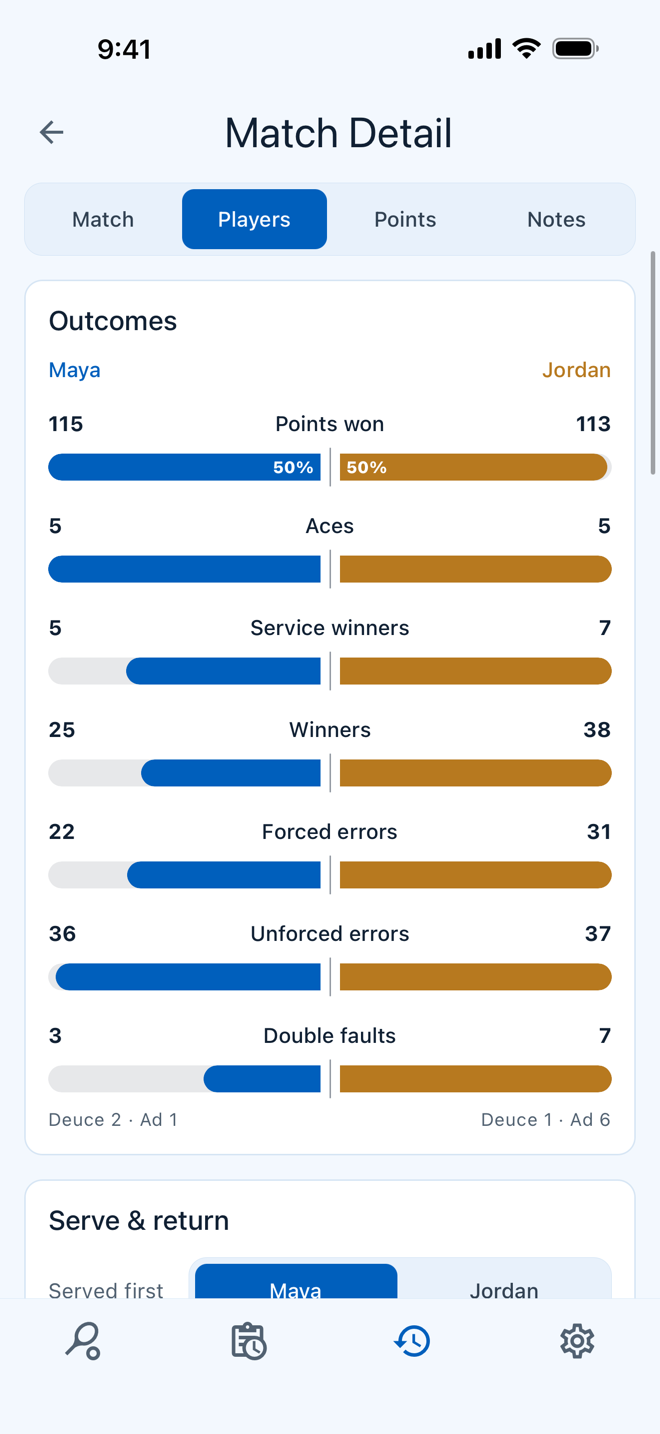
What the tags add up to
After the match, the tags become counts for each player, with the errors broken down by shot.
Two comparisons say the most. Winners against unforced errors shows whether a player is earning points or handing them over. And one shot with far more errors than the others is usually the thing to work on.
Try it at your next match.
RallyTap is fast and easy, with no login and no ads.

